I was 34 years old when I became a mother. I had traveled around the world, visiting six continents, enjoyed strong friendships and had left a challenging career in Silicon Valley to move closer to family in Pennsylvania. I loved my life. At the same time, I felt called to motherhood and welcomed this new chapter in my life with a joyful heart. I was ready and open to loving a child.
Perhaps because I waited so long to have my first child, I was very deliberate about my transition to motherhood. I had a strong personal identity and had done a lot of soul work. I had financial resources and experiences to share. I needed to think about how I wanted to be a mother. I knew that I wanted to not only raise a happy, engaged child, but also serve as a role model for a healthy, engaged adult life.
Parents are encouraged from our American culture, media and fellow parents to live a “child-centered life”. This didn’t feel quite right to me. Whether it is helicopter parenting or attachment parenting, there felt to me a “turning over” of our lives to the solitary focus of our children. Don’t get me wrong, I love being a mother and I love my children. But what resonates most for me is that I want to teach my children how to live. For me, this means teaching gratitude, joyfulness, humor, engagement, curiosity and love. I want to make sure that our girls have the self-worth, compassion and resilience to create their own adventurous life. And let’s be honest, I won’t be by their side for every step of their adventure, so I want to teach them how to make choices and find fulfillment.
I believe that bringing my best self to each moment is the most important gift that I can give to my children. I want to help them develop self-worth and empower them to trust themselves. I want to role model for them how to live with passion and compassion. I want them to see me facing adversity and overcoming obstacles. I want them to see me truly living, not just putting my own life on hold in order to be their mom. This means that our family life is multi-dimensional and takes into consideration all of the needs and desires of each individual.
Pamela Druckerman’s article “Why French Parents are Superior” in the WSJ helps to expand on some of these concepts from a French parenting culture perspective: “Yet the French have managed to be involved with their families without becoming obsessive. They assume that even good parents aren’t at the constant service of their children, and that there is no need to feel guilty about this.” (Article available here and her book is Bringing Up Bébé: One American Mother Discovers the Wisdom of French Parenting.)
Just a few weeks ago, a good friend and I took our kids to a children’s museum. Her child was continually coming back to us, asking us to play with them. My friend was torn – she wanted to not only be there for her children, but also enjoy some adult conversation. I said to her young son “Look at all of those big blocks – you can go and ask some of your friends, or the other children that you don’t know to play with you. Right now, it’s time for you Mommy and I to talk. We’ll be so excited to watch you from here and go to the next exhibit with you when we’re done talking.” I wanted to encourage independence, engagement with peers while also showing that some times are meant for adults.
Here are some other simple ways that I encourage both independence and engagement with my family:
- Plan activities to do together that follow the interests of each member of the family. This allows each of us to share our passions and expose new areas to the others. It teaches patience, tolerance and respect. (i.e. Our girls attended an hour-long IMAX on Jerusalem when age 2 & 6 because it was something important to Mom.)
- Not every song played in the car needs to be a kid’s song – we can only handle so many Frozen songs anyway. There should be time for Mom and Dad’s music too.
- If the children spill something on the floor, I expect their help cleaning it up in an age-appropriate way. I am not their housekeeper.
- At dinner, it is okay for the food to not be everyone’s favorite food. I always give an option for fresh veggies and fruits, but the meal is planned for the whole family.
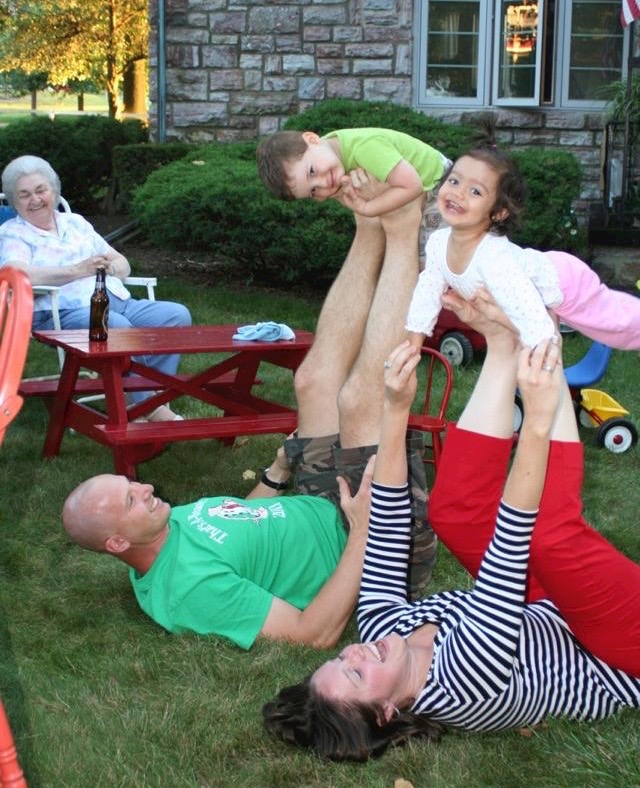
- Set aside time in your day when you play as a family, and time for separateness (kids play together while adults are interacting).
- Find ways to prioritize your hobbies and exercise – your children will be fine without you for an hour and you’ll be demonstrating to them that balance in all aspects of your life is important.
- Plan date nights out with your partner. Your children will learn that you need to make the time to love, cherish and nurture the most important adult relationship in your life.
We choose to live a family-centered life. We engage in activities and conversation that reflect the passions and interests of all members of our family – parents and children. We focus on teaching our girls how to live through the choices that we make and the values we instill. And we make sure that they understand how grateful we are to be their parents.