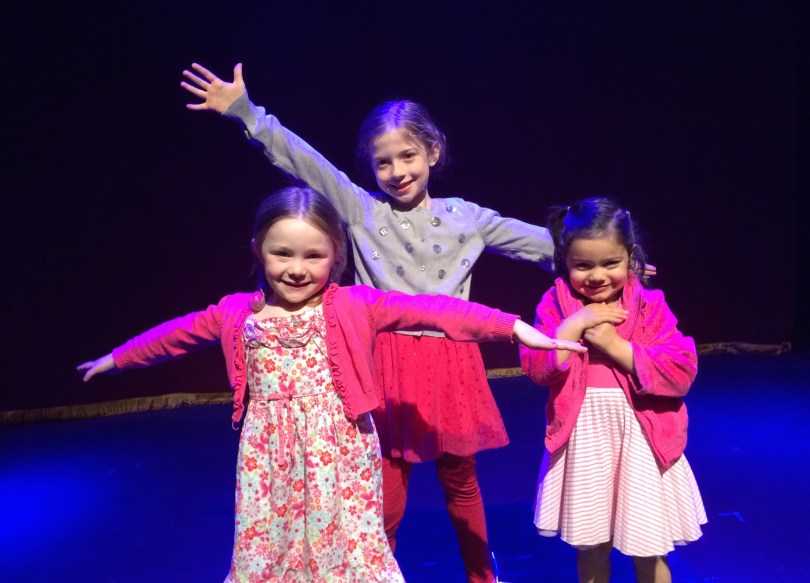
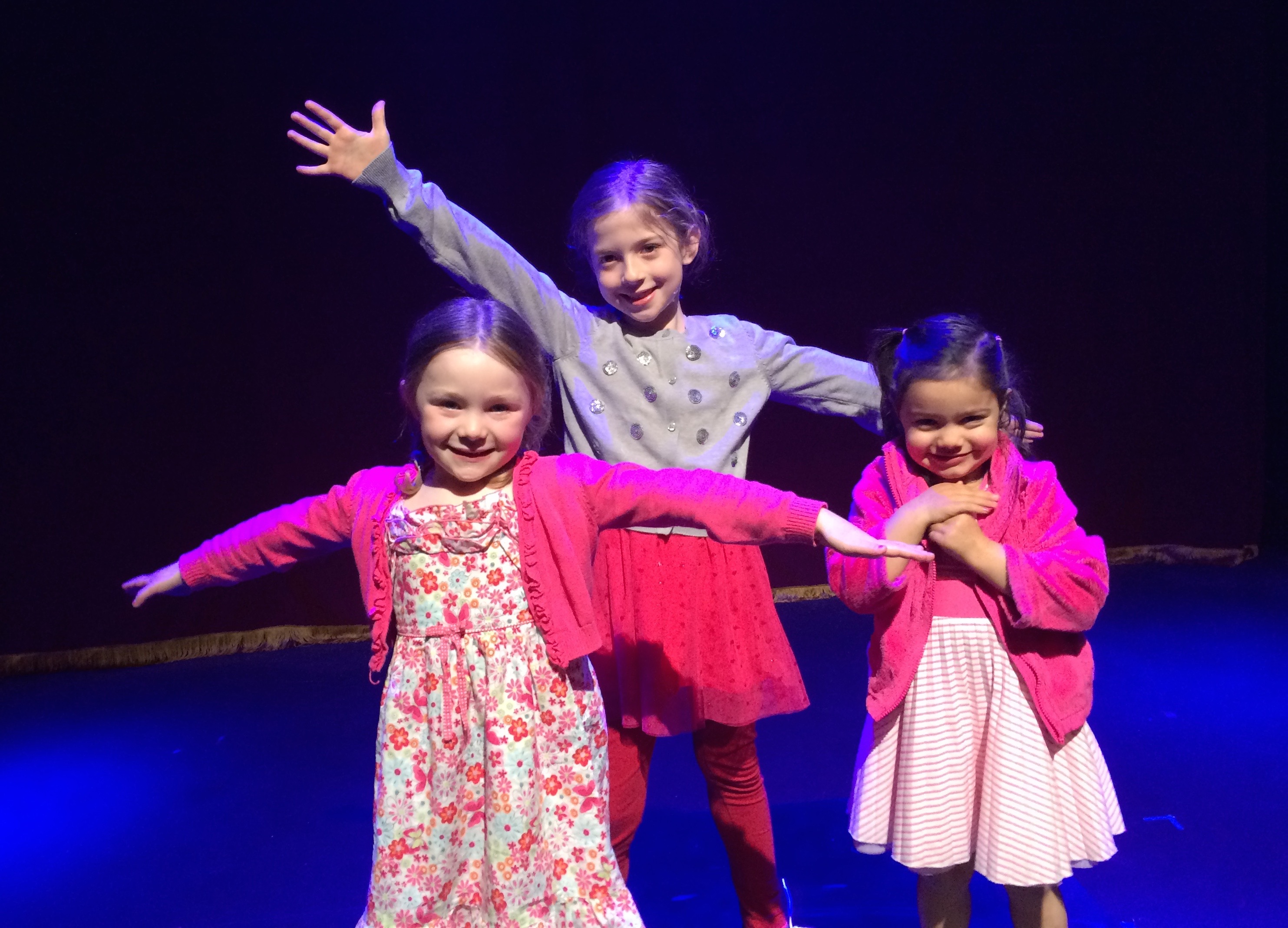
How long do you think your young children could sit quietly and watch an artistic performance? Quite possibly, much longer than you might think. I have been an advocate for arts exposure for children from a young age. At six months old, my youngest daughter sat quietly through an acoustic Norah Jones set. Children can adapt well to their environment. They can match the energy and mood of the adults around them. If you are able to be present with your children with a calm and positive energy, they will rise to the occasion to meet you in that moment.
When our girls were two and a half and six years old, we took them to a Saturday night InterPlay dance performance (un-scripted expressive movement with live dancers, music and photography – http://www.interplay.org). This was our first time taking our girls to an 8pm performance that had no explicit focus for children. They sat quiet as mice for 85 minutes, engrossed in the beauty unfolding on stage until my younger daughter leaned over and whispered “Mom, I need to go to the bathroom.” We quietly exited through a side door. Whether voice and piano recitals in a church sanctuary or modern dance in a small theater, our girls have found joy and pride partaking in these cultural events.
We believe it is important to expose our daughters to beauty and expression in all forms. Whether encouraging them to dance and sing (at the top of their lungs) at home or watching adults convey emotion and interpret meaning on stage, they are learning to appreciate and respect art and music. It is teaching them to be confident in expressing their own ideas and feelings. They are learning how to respect others who are both performing and watching the event by mirroring our behavior while sitting in the audience.
A couple of ideas to help prepare your children for their first show:
- Make it a very special occasion – allow them to pick a nice outfit to wear and infuse a sense of magic and awe when talking about the event.
- Set expectations – talk about what is going to happen in explicit detail and describe how you expect them to act “We will arrive at the theater and there will be lots of people in the front lobby. We’ll stay together as a family greeting people – talking nicely and smiling to them. We’ll find our seats…”
- Explain that others won’t be talking during the performance and you expect the same from them.
- Encourage them to whisper directly in your ear if they have something very important to tell you
- Have them “shake their sillies out” ahead of time (I use this quite often to transition from “children’s time” to a more reserved, quiet environment).
- Sit near an exit just in case you need to leave quickly.
- Make sure they are well-rested and well-fed before the event.
- Explain consequences and provide an incentive for after the show if they have paid attention and remained quiet (ice cream usually works).
- Most importantly, keep a calm and peaceful heart. This will help your children to match your energy.
- Talk about the performance after it is over – ask them impressions, feelings, what they think was happening on stage. Help them to create meaning and interpret the expression in different ways.
We want to introduce our daughters to different ideas and encourage tolerance and respect for various artistic expressions. Their own self-confidence builds as they watch others express themselves. By trusting them to act appropriately at special events, they learn that they are important and can trust themselves. You are creating beautiful memories to share and re-live with your children and teaching them that being together as a family is important and valued.
 Parenting with a Mindful Heart